
Calista

Categories
Weight Loss

The Complete Guide to Hormone Pellet Therapy: Pellets, Dosing, and Potential Benefits for Weight Loss

The Complete Guide to Hormone Pellet Therapy: Pellets, Dosing, and Potential Benefits for Weight Loss

Small changes in hormones can have a profound effect on how you feel, look, and perform each day. Many adults notice shifts in energy, mood, metabolism, and body composition as they age, often unaware that hormonal fluctuations may be at the root of these changes. When stubborn weight lingers, fatigue persists, and confidence fades, it is natural to seek answers that go beyond diet and exercise alone.

If you are struggling with unexplained weight gain, low energy, or other hormone-related symptoms, hormone pellet therapy may offer a path to renewed vitality and balance. This guide covers how it works, the science behind personalized dosing, and the potential benefits it offers, especially for weight management.

What Is Hormone Pellet Therapy, and How Does It Work?

Hormone pellet therapy is a modern approach to hormone replacement designed for individuals seeking consistent, long-lasting results. These tiny, plant-derived cylinders are formulated to closely mimic the structure of the body’s own hormones. Inserted just beneath the skin in a quick, minimally invasive procedure, the pellets steadily release bioidentical hormones in response to your body’s needs over several months.

Unlike oral tablets, creams, or injections that can cause hormone levels to spike and dip, hormone pellets dissolve gradually, providing a stable, physiologic dose of hormones around the clock. This steady delivery may translate into fewer symptoms and a more balanced sense of well-being. The entire process is guided by a comprehensive evaluation, ensuring your therapy is as unique as your body chemistry.

How Hormone Pellet Dosing Is Personalized

No two people experience hormone imbalance in the same way. Hormone pellet dosing is never one-size-fits-all. Instead, it is personalized using advanced laboratory diagnostics and clinical assessment. Your individualized dose is determined through a careful analysis of your symptoms, lifestyle, medical history, and detailed hormone level measurements. This approach aims to maximize the benefits of pellet therapy while minimizing risks and unwanted effects.

How Dosing Is Determined

Before treatment, extensive blood work is performed to map out your current hormone status, including estrogen, testosterone, thyroid, and other markers. This data is combined with a thorough symptom review and health history, allowing your provider to calculate a dose that is precisely calibrated to your body’s unique needs. By customizing the dose, pellet therapy aims to restore hormonal balance without overcorrection, supporting steady improvements in symptoms like fatigue, mood swings, sleep disturbances, and difficulties with weight control.

How Long Hormone Pellet Effects Last

One of the distinguishing features of hormone pellet therapy is its long-lasting, consistent hormone release. For most women, the effects of a single pellet insertion may last approximately three to four months, while men often experience benefits for up to five to six months due to differences in hormone metabolism and pellet dosage. Throughout this period, the pellets dissolve slowly, maintaining stable hormone levels and reducing the risk of the highs and lows associated with other delivery methods. Regular follow-up appointments and repeat lab testing are recommended to monitor your response and adjust dosing as needed.

When to Expect Results from Hormone Pellet Therapy

Understanding when to expect results can help set realistic goals and avoid frustration. Many individuals begin to notice subtle improvements within the first few weeks following pellet insertion. Early changes may include better sleep quality, increased energy, and improved mood stability. As the therapy continues, more pronounced benefits, such as improved body composition, reduced cravings, and greater daily motivation, typically emerge.

The full stabilization of hormone levels often occurs by the second or third month. Regular monitoring, open communication with your provider, and healthy lifestyle choices will all contribute to a positive experience with pellet therapy.

How Hormone Pellet Therapy Supports Weight Management

Balanced hormones are foundational to effective weight management. Hormone pellet therapy aims to address hormonal imbalances that may be associated with challenges in weight management for some individuals. By supporting optimal hormone levels, pellet therapy may help the body more efficiently regulate metabolism, appetite, and fat storage.

How Pellet Therapy May Support Metabolism

Hormones like estrogen and testosterone play a pivotal role in how your body burns calories and stores fat. When these hormones decline or shift out of balance, metabolism may slow, leading to stubborn weight gain. Hormone pellets work by gradually restoring natural hormone levels, which may support metabolic processes involved in energy balance and how the body utilizes stored energy.

Appetite and Cravings

Many people are surprised to learn that hormone fluctuations can trigger intense cravings and make it harder to feel satisfied after meals. The goal of hormone pellet therapy is to stabilize these hormones, which may support more stable appetite regulation and healthier eating patterns. Consistent hormone levels may play a role in appetite-regulating hormones such as leptin and ghrelin, helping you make healthier food choices with less willpower fatigue.

Lean Muscle Mass

Retaining and building lean muscle is crucial for a healthy metabolism and a firm, toned appearance. Testosterone and estrogen both influence muscle mass, and deficiencies can lead to muscle loss over time, especially as we age. Hormone pellet therapy is designed to support optimal hormone levels, which may make it easier to maintain or increase lean muscle through regular activity and may support metabolic function and healthy body composition when combined with lifestyle habits.

Stubborn Belly Fat

Abdominal fat is a common concern, particularly for women in midlife and men experiencing andropause. Lower estrogen or testosterone can shift fat storage patterns, resulting in more accumulation around the midsection. By addressing these deficiencies with pellet therapy, some individuals may notice changes in body composition, including how fat is distributed in the body. This effect is often most pronounced when pellet therapy is paired with balanced nutrition and physical activity.

Insulin Sensitivity

Hormone imbalances can contribute to insulin resistance, which may make it more difficult for the body to regulate blood sugar and can be associated with metabolic health concerns. Pellet therapy aims to support hormonal balance, which may influence factors related to metabolic function, including blood sugar regulation. Improved insulin function is associated with aspects of weight management, energy levels, and appetite regulation.

Setting Realistic Expectations for Weight Loss

While hormone pellet therapy can be a powerful tool in supporting weight management, it is not a replacement for healthy habits. The most significant and lasting improvements in body composition come when pellet therapy is integrated with a balanced diet, regular exercise, stress management, and adequate sleep. Pellet therapy may support hormonal balance, which can influence how the body responds to healthy diet and lifestyle choices, but results will vary depending on your commitment to overall wellness.

Regular check-ins with your provider, ongoing lab monitoring, and honest communication about your goals and progress will help ensure you achieve the best possible outcome.

Other Benefits of Hormone Pellet Therapy

Optimizing hormones with pellet therapy may support much more than just weight management. Hormonal balance plays a vital role in every system of the body, influencing mood, energy, sleep, sexual health, and even cognitive clarity.

Mood, Energy, and Mental Clarity

Consistent hormone levels fostered by pellet therapy may help smooth out the mood swings, irritability, and fatigue that often accompany hormonal shifts. Many patients report better sleep quality, increased daytime energy, and an enhanced ability to focus. These benefits can ripple throughout daily life, supporting productivity at work and enjoyment at home.

Libido and Overall Well-being

Changes in libido and sexual satisfaction are common symptoms of hormone imbalance. By restoring optimal levels of estrogen and testosterone, hormone pellet therapy may help improve desire and satisfaction and alleviate issues like vaginal dryness, hot flashes, and night sweats. Many patients report feeling more comfortable and confident in their own skin, contributing to stronger relationships and greater self-assurance.

Who is a Good Candidate for Hormone Pellet Therapy?

You may be a good candidate if you are experiencing:

While pellet therapy may be suitable for some individuals, it is not appropriate for everyone and requires medical evaluation. A comprehensive health evaluation, including a review of medical history, current medications, lifestyle factors, and thorough lab testing, is required to determine candidacy and rule out contraindications. Your safety and satisfaction are always the top priorities.

Find Out if Hormone Pellet Therapy Is Right for You at Calista Skin & Laser Center

Hormone pellet therapy offers a clinically backed approach to restoring hormonal balance, supporting weight management, and enhancing overall well-being. By delivering personalized, steady hormone dosing through pellets, this treatment may support hormonal balance, which can influence energy, mood, and overall well-being in some individuals. The most meaningful changes come when pellet therapy is integrated with healthy nutrition, exercise, and positive lifestyle choices.

As a leading provider of hormone pellet therapy in Colleyville, TX, Calista Skin & Laser Center is proud to serve the surrounding areas of Fort Worth, Southlake, Arlington, and Dallas. Call (817) 488-3838 to schedule your consultation and take the first step toward renewed vitality and balance.

Schedule a consultation

Please fill out the form below or call us at  817-488-3838

  • This field is for validation purposes and should be left unchanged.

By submitting this form, I consent to be contacted by Calista Skin & Laser Center Colleyville, TX via phone, text, email, or mail. Message and data rates may apply. Consent is not a condition of purchase. I acknowledge the Privacy Policy. Reply STOP to opt out

About the Author

I’m Kenneth Baird, Medical Director at Calista. I’ve been practicing family medicine since 1989 and became involved in aesthetics in 2005, starting with Botox injections and dermal fillers. I further expanded the scope of my practice to include anti-aging procedures and am currently a BioTE and GAINESWave provider. My patients appreciate my care and passion for their wellness, resulting in many satisfied patients and referrals. At the beginning of 2017, I became the Medical Director at Calista, where I perform and supervise clinical procedures. I’m excited to be performing aesthetic injections on Wednesday evenings.

When I’m not in the office, I enjoy spending time with my family, reading, exercising, and martial arts. As a third-degree black belt in Tae Kwon Do, I not only enjoy training but am also a corner judge and referee at state and national tournaments.

Schedule a consultation

Please fill out the form below or call us at 817-488-3838

  • This field is for validation purposes and should be left unchanged.

By submitting this form, I consent to be contacted by Calista Skin & Laser Center Colleyville, TX via phone, text, email, or mail. Message and data rates may apply. Consent is not a condition of purchase. I acknowledge the Privacy Policy. Reply STOP to opt out
Categories
Weight Loss

Lifestyle Hacks to Maximize Results with GLP-1 Weight Loss Peptides

Lifestyle Hacks to Maximize Results with GLP-1 Weight Loss Peptides

Every weight loss journey is unique, but for many adults, persistent struggles with appetite, cravings, and slow progress can feel overwhelming. GLP-1 peptides are increasingly studied as a tool in medical weight management, and their effects may be supported when paired with healthy daily habits. Many individuals using peptides for weight loss, including Tirzepatide and Semaglutide, find that the right lifestyle shifts make a real difference in results, comfort, and overall well-being.

Whether you are just starting out or looking to address a plateau, these practical, science-backed strategies may support your comfort, consistency, and overall wellness during therapy.

Why Lifestyle Matters When Using GLP-1 Peptides

GLP-1 weight loss peptides work by mimicking natural hormones in your body to help regulate appetite, slow digestion, and promote a longer-lasting feeling of fullness. While they can create a strong foundation for weight loss, their effects are often better supported when paired with intentional lifestyle habits.

Key habits include:

Together, these habits may support healthy routines, help preserve lean muscle, and reduce common side effects, focusing on overall wellness rather than solely on the scale.

How GLP-1 Peptides Work

GLP-1 peptides act on your body’s natural metabolic pathways by mimicking the glucagon-like peptide-1 hormone. This may help slow gastric emptying, reduce appetite signals, and support insulin sensitivity. Tirzepatide and Semaglutide are two peptides that have been widely studied for weight management, and many people report feeling full sooner and staying satisfied longer after meals.

These effects may contribute to reduced appetite and more stable energy levels for some individuals. However, they may also lead to side effects like nausea, indigestion, or changes in bowel habits, especially if eating habits are not adjusted. Lifestyle adjustments may help improve comfort and consistency while using GLP-1 peptides.

Prioritize Protein at Every Meal

One of the most effective ways to support your GLP-1 weight loss results is to prioritize lean, high-quality protein at every meal. When overall calorie intake decreases, your body needs sufficient protein to help maintain lean muscle mass.

Muscle tissue supports a healthy metabolism, helping you burn more calories even at rest. Preserving muscle may also reduce the risk of weight regain over time, and protein helps you feel fuller for longer, reducing the temptation to snack between meals.

Aim for a source of lean protein, such as:

This habit may help support lean muscle maintenance and overall nutrition during peptide therapy.

Eat Smaller, More Frequent Meals

Peptides for weight loss, like Semaglutide and Tirzepatide, slow the rate at which your stomach empties, which supports fullness but can also lead to bloating or discomfort when large meals are eaten too quickly.

Shifting toward smaller, more frequent meals throughout the day may help reduce digestive discomfort for some people. This approach helps prevent overwhelming your digestive system, reduces the likelihood of nausea or indigestion, and keeps energy levels more consistent. Try dividing your daily food intake into 4 to 6 smaller meals or snacks, spaced every 2 to 4 hours. Listen to your body and adjust as needed.

Create a Calorie Deficit You Can Sustain

Supporting weight loss with GLP-1 peptides generally still involves consuming fewer calories than your body burns. However, a moderate deficit tends to be more effective and sustainable than a dramatic restriction.

Severe calorie cuts can lead to fatigue, low mood, muscle loss, and nutritional gaps. Instead, a gentle reduction of approximately 250 to 500 calories per day from your maintenance level may support gradual fat loss while maintaining enough energy for daily activity and exercise. The appetite-related effects of peptides may help some people achieve a moderate calorie deficit more comfortably, especially when made under the guidance of one of our experts.

Move Your Body Consistently

Regular physical activity is a valuable complement to GLP-1 weight loss. Exercise supports calorie balance, helps preserve lean muscle, improves the body’s glucose metabolism, and benefits cardiovascular health.

A well-rounded routine includes both aerobic and strength-based movement. Examples include:

Many adults may benefit from aiming for approximately 150 minutes of moderate-intensity aerobic activity per week, along with two strength sessions. Before starting a new exercise program, check in with one of our providers and choose a routine you can stick with long-term.

Get Enough Sleep

Sleep is one of the most underestimated factors in any weight-management journey, and it becomes even more important when using GLP-1 weight-loss peptides. Poor or insufficient sleep can disrupt hunger-regulating hormones, increase cravings for calorie-dense foods, and make it harder for the body to recover and burn fat efficiently.

Most adults benefit from 7 to 9 hours of quality sleep per night. Supporting better sleep through consistent bedtimes, limiting screen time before bed, and maintaining a comfortable sleep environment may help your overall wellness and support your experience with peptide therapy.

Manage Stress

Chronic stress is a quiet barrier to weight loss that many people overlook. When stress levels remain elevated, the body produces more cortisol, a hormone that can increase appetite, promote fat storage, particularly around the midsection, and interfere with the metabolic benefits you are working to achieve with GLP-1 peptides.

Incorporating stress management practices into your daily routine does not need to be complicated. Examples include:

Managing stress through consistent routines, minimizing screen time, and maintaining a calm, comfortable environment can support overall wellness and enhance your results with peptide therapy.

Add Fiber and Healthy Fats to Your Diet

The right balance of fiber and healthy fats can significantly affect both how you feel and how well GLP-1 weight loss peptides support your goals.

Increase fiber gradually to avoid bloating, and pair it with consistent hydration. Including healthy fats in your meals can help you feel satisfied and stay on track over time.

Stay Hydrated

Consistent hydration is especially important when using peptides for weight loss. Dehydration can worsen common side effects such as headache, fatigue, or constipation, and may also make it harder to distinguish thirst from hunger.

Aim for 8-10 cups of water per day, adjusting intake based on activity level and climate. Carrying a reusable water bottle makes it easier to sip consistently. If plain water feels monotonous, try adding fresh fruit slices or herbal tea. Staying well-hydrated supports metabolism, appetite regulation, and digestive comfort.

Consider Working with a Nutrition Professional

Every individual’s needs are different, especially when using GLP-1 peptides. An expert can provide personalized meal planning, guidance on managing side effects, and help ensure you are getting the nutrients your body needs. At Calista Skin & Laser Center, we go beyond prescribing Tirzepatide or Semaglutide. Regular weigh-in visits, ongoing support, and personalized guidance are all part of how we help our clients build habits that make results last.

Track Your Progress Beyond the Scale

The scale is one data point, but it does not tell the whole story. As your body composition shifts, you may be losing fat and gaining muscle simultaneously, which can keep the number on the scale flat even when real progress is happening. Notice how your clothes fit, how your energy feels throughout the day, and how your hunger and cravings have shifted since starting peptide therapy. A simple journal can help you spot patterns and stay motivated when the scale does not move the way you expect.

Foods to Limit on Your Peptide Journey

Certain food choices can interfere with the comfort and effectiveness of your GLP-1 peptide regimen. Focus on minimizing:

Focusing on whole, minimally processed foods works with your body and the effects of GLP-1 peptides rather than against them. Remember, individual responses to GLP-1 peptides can vary, and pairing therapy with healthy habits under professional guidance is the safest way to support your results and overall well-being.

Start Your GLP-1 Weight Loss Journey Today

GLP-1 peptides, such as Tirzepatide and Semaglutide, are being studied as part of medical weight management. Their effects may be best supported when combined with daily habits that promote overall wellness. Prioritizing protein, eating smaller meals, supporting a reasonable calorie deficit, staying active, getting quality sleep, managing stress, and staying hydrated all work together to help you feel your best and see the results you are working toward.

Your journey is about more than the number on the scale. It is about building a life that feels sustainable, energized, and healthy. As a leading provider of GLP-1 peptides in Colleyville, TX, Calista Skin & Laser Center is proud to serve the communities of Fort Worth, Southlake, Arlington, and Dallas. If you are interested in learning more about GLP-1 peptide therapy, we recommend scheduling a consultation with our team at (817) 488-3838 to discuss your options and whether this treatment may be appropriate for you. Together, we can help you build a personalized plan and take meaningful steps toward your wellness goals.

Schedule a consultation

Please fill out the form below or call us at  817-488-3838

  • This field is for validation purposes and should be left unchanged.

By submitting this form, I consent to be contacted by Calista Skin & Laser Center Colleyville, TX via phone, text, email, or mail. Message and data rates may apply. Consent is not a condition of purchase. I acknowledge the Privacy Policy. Reply STOP to opt out

Disclaimer:

*We offer compounded versions of GLP-1 Weight Loss, which are not FDA-approved in any manner or clinically proven to provide any benefits. References to these medications on this website pertain to compounded formulations and are not associated with or equivalent to their non-compounded counterparts. Compounded medications are prepared by licensed pharmacies as prescribed by healthcare providers, and their safety and efficacy have not been evaluated by the FDA. Please consult your healthcare provider for personalized medical advice.

About the Author

I’m Kenneth Baird, Medical Director at Calista. I’ve been practicing family medicine since 1989 and became involved in aesthetics in 2005, starting with Botox injections and dermal fillers. I further expanded the scope of my practice to include anti-aging procedures and am currently a BioTE and GAINESWave provider. My patients appreciate my care and passion for their wellness, resulting in many satisfied patients and referrals. At the beginning of 2017, I became the Medical Director at Calista, where I perform and supervise clinical procedures. I’m excited to be performing aesthetic injections on Wednesday evenings.

When I’m not in the office, I enjoy spending time with my family, reading, exercising, and martial arts. As a third-degree black belt in Tae Kwon Do, I not only enjoy training but am also a corner judge and referee at state and national tournaments.

Schedule a consultation

Please fill out the form below or call us at 817-488-3838

  • This field is for validation purposes and should be left unchanged.

By submitting this form, I consent to be contacted by Calista Skin & Laser Center Colleyville, TX via phone, text, email, or mail. Message and data rates may apply. Consent is not a condition of purchase. I acknowledge the Privacy Policy. Reply STOP to opt out
Categories
Weight Loss

Tirzepatide Weight-Loss Dosage Chart & Expectations

Woman in athletic wear standing indoors and measuring her waist with a tape measure, smiling as she looks down at the measurement.

Tirzepatide Weight-Loss Dosage Chart & Expectations

Embarking on a weight loss journey can feel overwhelming, especially when considering new medications and treatment plans. At our welcoming Colleyville medspa, we are committed to providing you with the knowledge and support you need to make informed decisions about your health. This guide offers a detailed look at the tirzepatide dosing schedule, what to expect at every phase, and actionable insights to make your experience as safe and successful as possible. If you are considering tirzepatide or want personalized advice, reach out today to schedule a confidential consultation. Your path to improved wellness could start with a single step.

Embarking on Your Weight Loss Journey with Tirzepatide

Tirzepatide is an option for individuals seeking effective weight management. As obesity and weight-related health concerns continue to rise, many are turning to advanced therapies to achieve lasting results. Tirzepatide has been shown in clinical studies to support meaningful weight loss in many patients, particularly in adults who have struggled with traditional diet and exercise alone. In this guide, you will discover everything you need to know about tirzepatide dosage charts, titration schedules, expected weight loss, side effects, and how to optimize your results.

The Science Behind Tirzepatide: How It Accelerates Weight Loss

Tirzepatide works through a unique mechanism that sets it apart from other weight loss therapies. This medication acts as a dual agonist, targeting both the glucose-dependent insulinotropic polypeptide (GIP) receptor and the glucagon-like peptide-1 (GLP-1) receptor. By activating these two critical pathways, tirzepatide can help regulate blood sugar and reduce appetite, creating an environment in which your body is more responsive to weight-loss efforts.


  • GIP and GLP-1 receptor activity: These hormones naturally signal the body to release insulin, slow gastric emptying, and decrease hunger cues. Tirzepatide mimics their action, supporting better blood sugar control and appetite suppression.
  • Metabolic benefits: Clinical research has shown that tirzepatide not only helps reduce body weight but can also improve markers of metabolic health, such as cholesterol and blood glucose levels.

Clinical trials have consistently demonstrated that individuals using tirzepatide experience greater weight loss compared to those on placebo or other standard treatments. These findings make tirzepatide a highly promising option for those committed to meaningful lifestyle change.

Starting Your Tirzepatide Treatment: The Initial Dosage Phase

The journey with tirzepatide begins with a careful introductory phase designed to help your body adjust to the medication. Most people will start with a dose of 2.5 mg once per week. This initial phase typically lasts for four weeks.

  • Why start low? The lower starting dose helps minimize the risk of side effects, especially gastrointestinal symptoms like nausea or upset stomach. Gradually introducing tirzepatide allows your digestive system and metabolism to become accustomed to the new medication.
  • What to expect: During these first weeks, it is important to monitor your body’s response. You may notice early appetite suppression or subtle changes in digestion. If any side effects occur, they are often mild and transient at this stage.

Navigating the Tirzepatide Dosage Escalation Schedule

Once you have completed the initial four-week period at 2.5 mg, your provider will assess your tolerance and response. If you are doing well, the dose may be gradually increased in steps. This careful titration is key to optimizing weight loss while keeping side effects manageable.

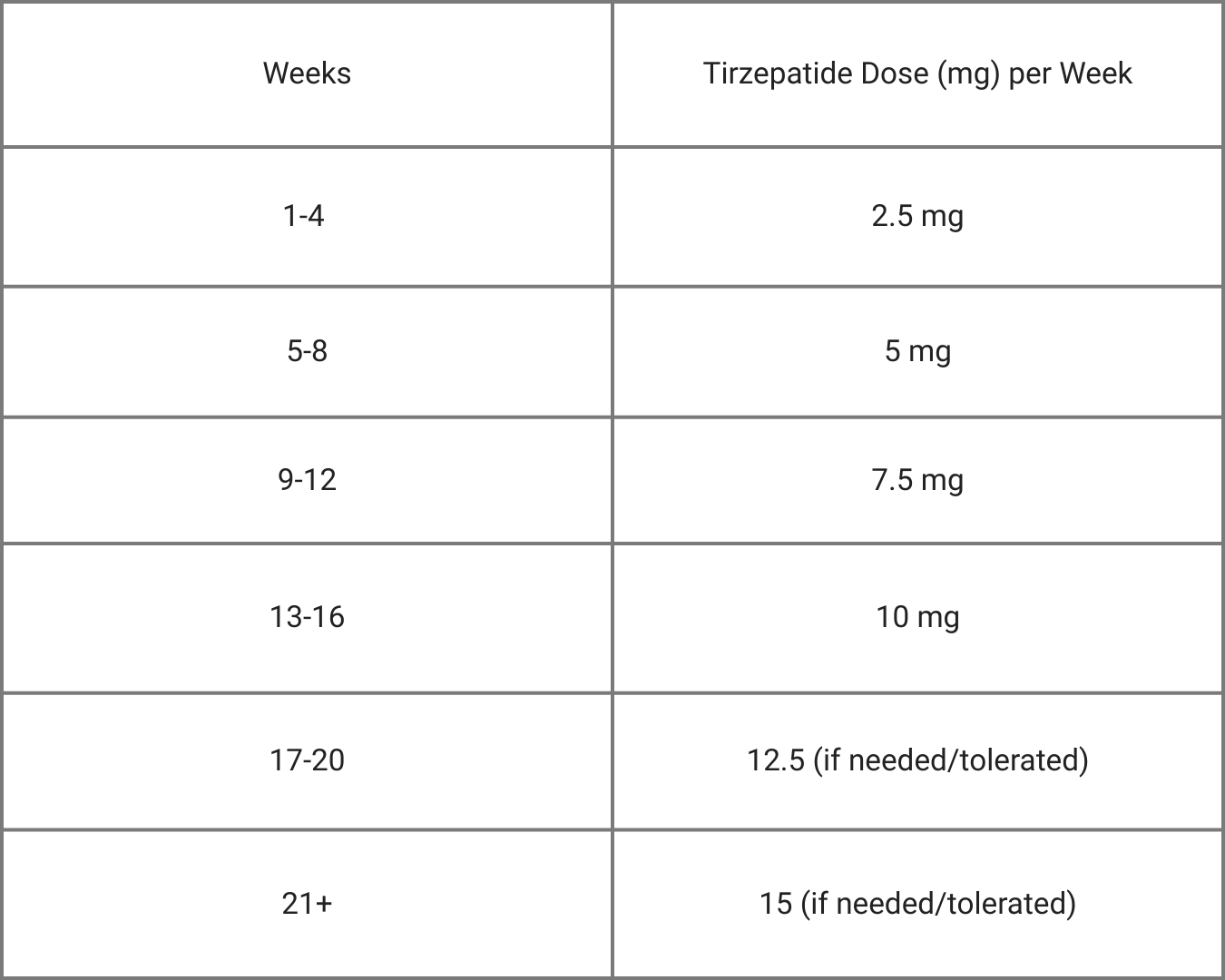
  • Dose increases: Typically, your tirzepatide dose increases every four weeks by 2.5 mg increments, if tolerated.

Your Personalized Tirzepatide Dose Progression Chart

Below is a sample tirzepatide dosage chart that illustrates the stepwise approach to dose escalation:

Not everyone will require the highest dose. Your healthcare provider will tailor your tirzepatide dose per week based on your individual response and any side effects you may experience. The goal is to find the dose that supports your weight management while remaining comfortable.

Achieving Your Goals: Understanding Tirzepatide Maintenance Doses

Once you have reached a dose that is both effective and well-tolerated, you will enter the maintenance phase. Most individuals find their optimal tirzepatide weekly dose at 5 mg, 10 mg, or 15 mg. The specific maintenance dose will be determined in collaboration with your provider and may be adjusted over time.

  • Personalized dosing: Not every patient needs to reach the highest dose. Your maintenance dose is based on your progress, tolerance, and weight loss goals.
  • Ongoing monitoring: Regular check-ins help ensure you are continuing to respond well and can address any questions or concerns that arise.

Real Results: What to Expect from Tirzepatide for Weight Loss

What kind of results could you see with tirzepatide? Clinical trials show that individuals using this medication can achieve substantial weight loss over approximately 72 weeks, particularly when combined with healthy lifestyle changes.

  • Weight loss outcomes: In clinical studies, some participants experienced double-digit percentage weight loss over time.
  • Dose-response relationship: Higher tirzepatide doses are generally associated with greater weight loss, but even those on lower maintenance doses can see impressive results.
  • Timeline: Most weight reduction occurs gradually over the first one to two years, supporting sustainable, long-term change.

These outcomes demonstrate why tirzepatide is generating so much excitement in the medical and wellness communities. It may empower you to reach milestones that previously felt out of reach.

Optimizing Your Experience: Managing Potential Side Effects

While tirzepatide offers significant benefits, it is important to be aware of potential side effects and to know how to manage them effectively. Most side effects are mild to moderate and become less noticeable as your body adapts.

Common side effects:

  • Nausea
  • Vomiting
  • Diarrhea
  • Constipation
  • Mild abdominal discomfort

Why side effects occur: These issues are most likely during the dose escalation phase, which is why the stepwise tirzepatide dosing schedule is so important.

How to minimize discomfort:

  • Eat smaller, more frequent meals.
  • Avoid high-fat or spicy foods.
  • Stay hydrated.
  • Let your provider know if side effects persist or worsen.

Monitoring is essential. Reach out to your healthcare provider right away if you experience severe or persistent symptoms, such as dehydration, severe abdominal pain, or signs of an allergic reaction.

Seamless Integration: Missed Doses & Administration Best Practices

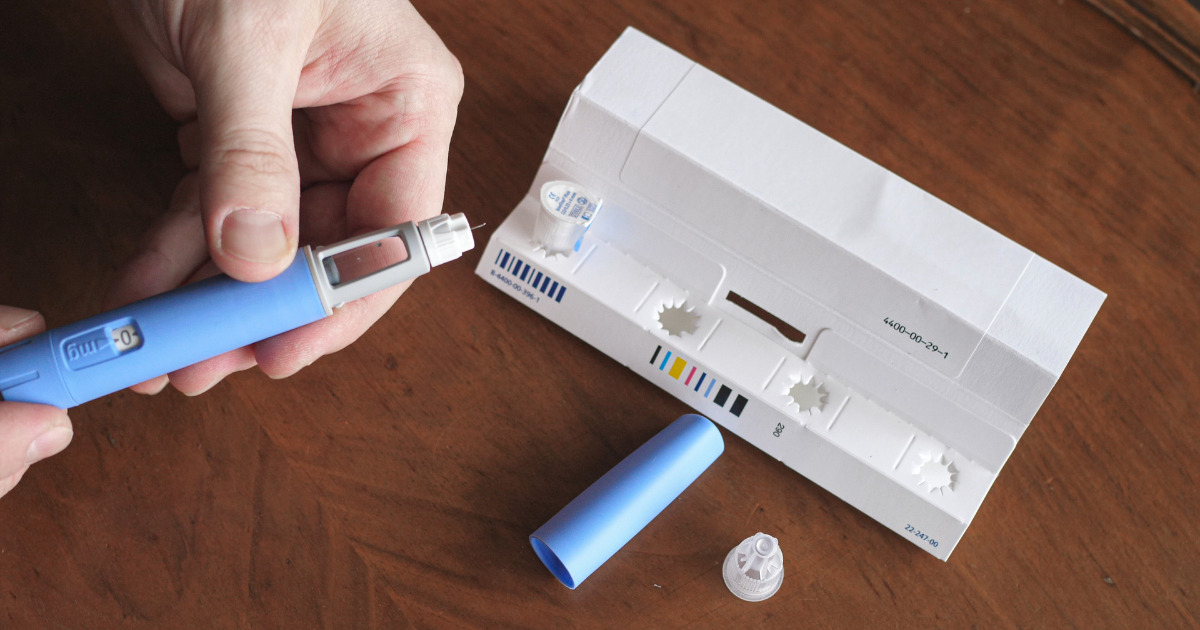
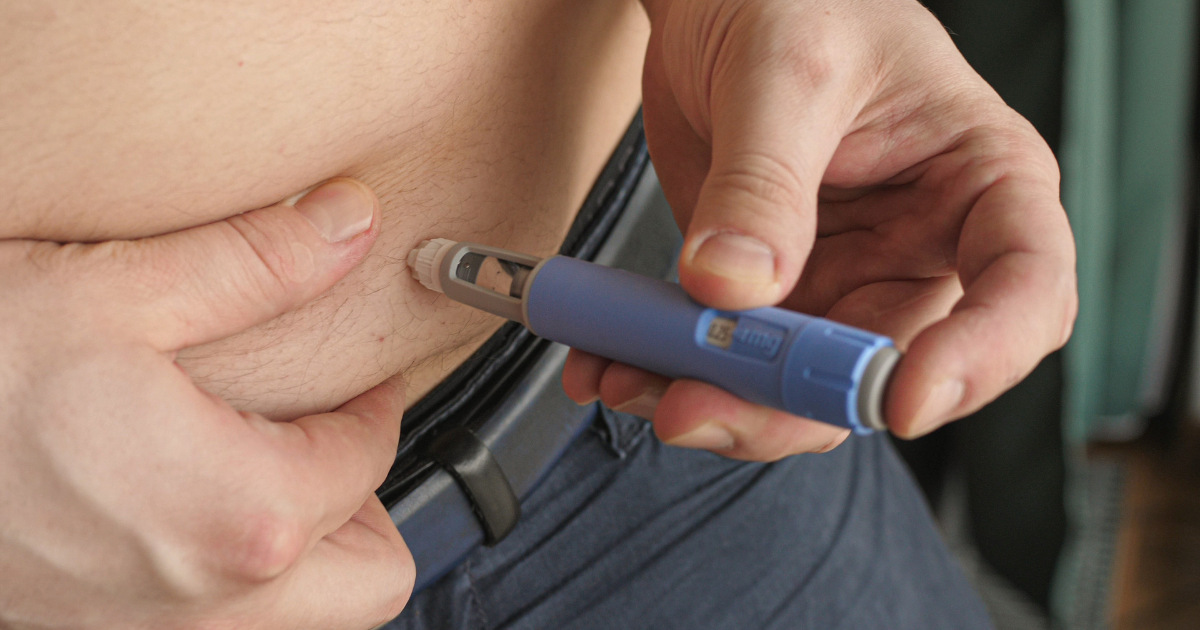
Tirzepatide is administered as a subcutaneous injection once weekly, making it convenient to fit into your busy lifestyle. Here are some tips for smooth administration and what to do if you miss a dose:

  • Weekly routine: Choose a consistent day and time each week for your injection. This builds a habit and reduces the risk of missing a dose.
  • Missed dose guidance:
    • If you remember within 4 days, take your dose as soon as possible.
    • If more than 4 days have passed, skip the missed dose and resume your regular schedule with the next dose.
    • Do not take two doses at the same time to catch up.
  • Injection sites: Rotate areas such as the abdomen, thigh, or upper arm to minimize skin irritation.

Proper administration helps ensure the medication works effectively and supports your weight loss goals.

Beyond the Injection: Lifestyle Strategies for Enhanced Results

Tirzepatide works best as part of a holistic approach to weight management. For optimal outcomes, combine your tirzepatide treatment with:

  • Balanced nutrition: Focus on nutrient-dense meals, portion control, and mindful eating.
  • Regular physical activity: Aim for a mix of cardiovascular exercise, strength training, and flexibility work.
  • Behavioral support: Consider working with a coach or support group for accountability and encouragement.
  • Ongoing medical supervision: Regular follow-ups with your provider help monitor progress and make any necessary adjustments to your tirzepatide dose or overall plan.

These lifestyle measures can help amplify the positive effects of tirzepatide and foster durable, healthy habits.

Your Path to a Healthier You: Key Takeaways & Next Steps

Tirzepatide offers a structured, evidence-based path to weight loss with a focus on gradual, sustainable results. Here is a quick summary of what you have learned:

  • Tirzepatide dosing begins at 2.5 mg weekly, then increases in 2.5 mg increments every four weeks as tolerated.
  • Maintenance doses are typically 5 mg, 10 mg, or 15 mg, customized to your unique needs.
  • Most people experience significant weight loss, especially when combining medication with healthy lifestyle choices.
  • Side effects are generally mild and decrease over time, especially when doses are increased gradually.
  • Consistent weekly administration and collaboration with your provider are key to success.

Every individual’s journey is unique. To ensure your safety and maximize your results, consult with a qualified medical professional before starting or adjusting tirzepatide. Calista Skin & Laser Center is proud to be a leading provider of tirzepatide in Colleyville, TX, offering top-rated weight-loss shots to the surrounding areas of Fort Worth, Southlake, Arlington, and Dallas. Our caring team is here to support you with expert guidance and compassionate care.

Ready to learn more about how tirzepatide could fit into your weight loss plan? Contact us today by calling (817) 488-3838 to schedule your personalized consultation and take the next step toward a healthier, more confident you.

Schedule a consultation

Please fill out the form below or call us at  817-488-3838

  • This field is for validation purposes and should be left unchanged.

By submitting this form, I consent to be contacted by Calista Skin & Laser Center Colleyville, TX via phone, text, email, or mail. Message and data rates may apply. Consent is not a condition of purchase. I acknowledge the Privacy Policy. Reply STOP to opt out

Disclaimer:

*We offer compounded versions of GLP-1 Weight Loss, which are not FDA-approved in any manner or clinically proven to provide any benefits. References to these medications on this website pertain to compounded formulations and are not associated with or equivalent to their non-compounded counterparts. Compounded medications are prepared by licensed pharmacies as prescribed by healthcare providers, and their safety and efficacy have not been evaluated by the FDA. Please consult your healthcare provider for personalized medical advice.

About the Author

I’m Kenneth Baird, Medical Director at Calista. I’ve been practicing family medicine since 1989 and became involved in aesthetics in 2005, starting with Botox injections and dermal fillers. I further expanded the scope of my practice to include anti-aging procedures and am currently a BioTE and GAINESWave provider. My patients appreciate my care and passion for their wellness, resulting in many satisfied patients and referrals. At the beginning of 2017, I became the Medical Director at Calista, where I perform and supervise clinical procedures. I’m excited to be performing aesthetic injections on Wednesday evenings.

When I’m not in the office, I enjoy spending time with my family, reading, exercising, and martial arts. As a third-degree black belt in Tae Kwon Do, I not only enjoy training but am also a corner judge and referee at state and national tournaments.

Schedule a consultation

Please fill out the form below or call us at 817-488-3838

  • This field is for validation purposes and should be left unchanged.

By submitting this form, I consent to be contacted by Calista Skin & Laser Center Colleyville, TX via phone, text, email, or mail. Message and data rates may apply. Consent is not a condition of purchase. I acknowledge the Privacy Policy. Reply STOP to opt out
Categories
Weight Loss

How Long Do Semaglutide Side Effects Last? A Guide to Help You Navigate Post-Injection Woes

How Long Do Semaglutide Side Effects Last? A Guide to Help You Navigate Post-Injection Woes

If you’ve been paying any attention to the news or celebrity gossip lately, you’ve most likely heard of semaglutide. This remarkable weight loss drug has taken Hollywood (and the rest of the world) by storm.

While Semaglutide is a safe, effective weight management tool with countless success stories, it’s important to realize that no medication comes without its associated risk of side effects. Before committing to taking any medication, it’s important to understand what symptoms the drug may cause fully. Here’s what to know about the most common semaglutide side effects, how long they typically last, and how to reduce your symptoms.

Why Everyone Is Using Semaglutide for Weight Loss?

a woman using Semaglutide

Semaglutide was first FDA-approved for use as a type 2 diabetes medication. It falls into the category of GLP-1 agonists, which means it mimics the actions of the hormone glucagon-like peptide-1. This is a hormone the body releases after eating. It helps slow the digestion rate, stimulate insulin secretion, and inhibit glucagon release. These functions help GLP-1 agonist medications reduce high blood sugar (hyperglycemia) in people with type 2 diabetes.

If semaglutide is so effective for treating type 2 diabetes, you may be wondering why people are using it for weight loss. The answer is quite simple: the exact mechanisms semaglutide employs to treat type 2 diabetes also help the body get rid of excess weight. The drug functions as a remarkably effective weight loss tool by reducing blood sugar levels, slowing gastric emptying, and increasing satiety.

What are the Most Common Semaglutide Side Effects?

You probably have a few questions if you’re thinking about losing weight with semaglutide injections. You may wonder, “What are semaglutide side effects like?” or “When do semaglutide side effects start?” The answers to these questions may vary slightly per individual.

Some people experience few to no side effects while taking semaglutide, while others get so sick they have to stop taking the medication altogether. The difference in how people respond to this popular weight-loss drug may be partly due to genetics and medical history. However, some people get sick because they try to increase their weekly dosage too quickly. Or, they may order semaglutide from a compounding pharmacy online and start with a much too high dosage.

Only semaglutide injections must be ordered from a skilled and trusted provider. Otherwise, patients may not know what dosage to take and end up over-medicating themselves. This could lead to severe side effects. Experienced providers know how to mitigate their patients’ risk of semaglutide side effects. They do this by starting with a low dose and slowly increasing the injection amount until they reach the most effective, maximum dosage.

Even if you receive semaglutide injections from a skilled provider, there’s still a possibility you might experience some temporary unwanted side effects. They will most likely occur when you begin taking the medication or your provider increases your weekly dosage. Here are some of the most commonly reported symptoms associated with semaglutide injections and how to reduce them.

Related Reading: Semaglutide Dosage Chart

Nausea

Nausea is the most common side effect associated with GLP-1 medications like semaglutide. It’s not clear why the medication has this effect on the gut, but it may be related to the way semaglutide slows digestion. Fortunately, most people report a reduction in their nausea within a few weeks of taking the drug.

How To Treat:

You can mitigate nausea by avoiding greasy, ultra-processed, and high-sugar foods and drinks. You should also listen to your body and stop eating when you feel full. If you continue eating past the point of fullness, you could end up feeling nauseous and bloated. Remember, your digestive tract slows down while you’re on semaglutide. Therefore, you must eat slowly and observe your body’s satiety cues.

Bloating

a woman drinking water

Bloating is another one of the most common semaglutide side effects. As with nausea, this symptom is likely due to slow gastric emptying. 

How To Treat:

You may reduce bloating by staying hydrated, avoiding carbonated beverages, and avoiding beans, lentils, and other foods that can cause excess gas.

Constipation

image of vegetables

Regular bowel movements are essential when taking semaglutide. Many patients experience constipation because the drug slows down their digestive processes. 

How To Treat:

Drink plenty of water each day to help move foods through your body. Include high-fiber foods such as fruits and vegetables to help you maintain a regular bathroom schedule.

Diarrhea

a woman saying NO to fast food or unhealthy foods

In some cases, patients with semaglutide side effects experience loose bowels instead of constipation. Persistent diarrhea can lead to electrolyte imbalances, nutritional deficiencies, and embarrassment. If one of your semaglutide side effects includes diarrhea, you can do a few things.

How To Treat:

Cut back or eliminate high-fat foods like cheese, ice cream, and milk from your diet. They can contribute to semaglutide-related diarrhea. You should also avoid highly greasy foods like fried chicken, French fries, and pizza for the same reason. Check with your healthcare provider if you ever get dizzy or weak while experiencing frequent diarrhea. You should also talk to your semaglutide provider to see if they can cut your dose back a bit until your symptoms subside.

Headache

Not everyone experiences headaches while taking semaglutide, but some people do. While semaglutide itself may not directly cause head pain, some of its associated side effects may cause headaches in some people. For example, dehydration from diarrhea or vomiting could lead to head pain. Decreased blood glucose from semaglutide usage could also cause headaches.

How to Treat:

To reduce head pain while taking GLP-1 agonists, prioritize adequate daily hydration. Make sure you’re drinking at least eight glasses of water per day throughout the day. Get in the habit of taking a water bottle with you everywhere you go so you can sip from it as needed. You might also relieve headaches by taking the right dose of semaglutide before bed instead of in the morning. Doing this can help you sleep through unwanted side effects so you feel better when you wake up.

Getting quality sleep at night is another great way to reduce migraines. Your body needs time to recharge and repair its cells, and it primarily does these two things while you sleep. Headaches commonly occur after a chronic lack of sleep. They’re often your body’s way of telling you to slow down and take time for rest and rejuvenation.

Fatigue

Taking semaglutide can make you feel more tired than usual, especially for the first few weeks while your body grows accustomed to the medication. Some of the most common reasons for semaglutide-related fatigue include eating too few calories, decreased blood sugar levels, and dehydration. Fortunately, you should start to get some of your energy back once your body adjusts to the medication’s effects. In the meantime, there are a few things you can do to fight the stubborn energy slumps semaglutide can cause.

How to Treat:

To treat persistent fatigue while taking semaglutide, make sure you’re eating enough calories to support your body’s needs. Semaglutide can decrease your appetite and make you feel like you don’t need to eat as much. This is a huge plus for anyone who experiences intense cravings and has a problem with overeating. However, it’s easy to consume too few calories on semaglutide and not even realize it because you feel satiated more quickly than you used to. You can use online calculators to determine how many calories you should eat to support your body’s needs based on your height, weight, gender, and activity levels.

Abdominal Pain

Semaglutide slows down the body’s digestive processes, which means it takes longer for the food you consume to make its way out of your body. Therefore, you’re more likely to feel abdominal pain due to your slowed digestion rate.

How to Treat:

Treat abdominal pain by eating smaller meals more frequently throughout the day. That way, you’re less likely to feel like you have a large lump of food trying to make its way through your digestive tract at any one time. In cases of severe pain, you may need to talk with your provider about temporarily reducing your dosage until your body grows accustomed to it.

How Long Do Semaglutide Side Effects Last?

Your experience while taking semaglutide may be different from someone else’s. However, most people only experience unwanted semaglutide side effects for the first few weeks of treatment. After that, side effects typically subside or go away completely. Some people may also experience a temporary resurgence of symptoms each time their dosage increases.

Unfortunately, some semaglutide patients may never experience a reduction in symptoms. If this happens to you, your provider will most likely recommend that you stop taking the drug.

Tips to Prevent & Handle Semaglutide Side Effects

In addition to utilizing the tips above, there are other ways to prevent and handle side effects from semaglutide injections. Try the following suggestions to minimize unwanted symptoms and get the best treatment outcome.

Eat Healthy

a woman eating healthy

Establishing long-term healthy eating habits is key to keeping weight off during and after semaglutide. Fill your plate with nutrient-rich foods like fresh vegetables and fruits, complex carbohydrates, lean protein, and healthy fats. Avoid nutrient-poor options like fast food, highly processed grocery store foods, and sugary treats. Eating a nutritious diet may lower your risk of experiencing semaglutide side effects.

Exercise

A pack of individuals running

Physical activity is essential for optimal health. It may also help move food through your digestive tract so you feel less bloated and uncomfortable. Make sure you incorporate cardiovascular exercises, weight training, and stretching into your weekly routine. Exercise will help you maximize weight loss and improve your overall fitness.

Take Medication On-Time as Prescribed

To reduce your risk of side effects, always take semaglutide as prescribed. Don’t ever try to increase your dose too rapidly. Take your medication once per week and try to do it on the same day and at the same time each week.

Ensure you inject the medication in the correct area of the body as your provider prescribes. This will likely be in the stomach, upper arm, or thigh. Commit to completing the entire treatment plan timeline, usually 20+ weeks. Doing all of these things can help reduce any semaglutide side effects you experience while ensuring the best treatment outcome.

Lose Weight With Semaglutide Injections

Are you ready to experience semaglutide’s life-changing benefits? Now that you know what to expect and how to mitigate side effects, it’s time to start your semaglutide weight loss treatment. Contact Calista Skin & Laser Center at 817-488-3838 to reserve your appointment.

Schedule a consultation

Please fill out the form below or call us at  817-488-3838

  • This field is for validation purposes and should be left unchanged.

By submitting this form, I consent to be contacted by Calista Skin & Laser Center Colleyville, TX via phone, text, email, or mail. Message and data rates may apply. Consent is not a condition of purchase. I acknowledge the Privacy Policy. Reply STOP to opt out

Disclaimer:

*We offer compounded versions of GLP-1 Weight Loss, which are not FDA-approved in any manner or clinically proven to provide any benefits. References to these medications on this website pertain to compounded formulations and are not associated with or equivalent to their non-compounded counterparts. Compounded medications are prepared by licensed pharmacies as prescribed by healthcare providers, and their safety and efficacy have not been evaluated by the FDA. Please consult your healthcare provider for personalized medical advice.

About the Author

I’m Kenneth Baird, Medical Director at Calista. I’ve been practicing family medicine since 1989 and became involved in aesthetics in 2005, starting with Botox injections and dermal fillers. I further expanded the scope of my practice to include anti-aging procedures and am currently a BioTE and GAINESWave provider. My patients appreciate my care and passion for their wellness, resulting in many satisfied patients and referrals. At the beginning of 2017, I became the Medical Director at Calista, where I perform and supervise clinical procedures. I’m excited to be performing aesthetic injections on Wednesday evenings.

When I’m not in the office, I enjoy spending time with my family, reading, exercising, and martial arts. As a third-degree black belt in Tae Kwon Do, I not only enjoy training but am also a corner judge and referee at state and national tournaments.

Schedule a consultation

Please fill out the form below or call us at 817-488-3838

  • This field is for validation purposes and should be left unchanged.

By submitting this form, I consent to be contacted by Calista Skin & Laser Center Colleyville, TX via phone, text, email, or mail. Message and data rates may apply. Consent is not a condition of purchase. I acknowledge the Privacy Policy. Reply STOP to opt out
Categories
Weight Loss

Semaglutide Weight Loss Dosage Chart: What to Expect During Your Weight Loss Journey

image of semaglutide

Semaglutide Weight Loss Dosage Chart: What to Expect During Your Weight Loss Journey

Are you thinking about taking Semaglutide injections to drop excess pounds? If so, it’s important to review the typical Semaglutide weight loss dosage chart so you know how your treatments will work. Most people begin treatment with the same low dosage and slowly work their way up to a dosage that works well for them. This may be the maximum recommended dosage or something a bit lower, depending on each person’s weight loss goals and tolerance to the drug.

Semaglutide belongs to a class of drugs called GLP-1 agonists. These drugs work similarly to natural hormones found within the gut that control cravings and hunger, slow digestion, and prevent overeating. Semaglutide has helped millions of people lose excess pounds, even after other interventions didn’t work. Will you be next to benefit from this remarkable weight loss aid? Here’s what you should know about the typical Semaglutide weight loss dosage chart and what to expect during your weight loss journey.

How Semaglutide Helps You Lose Weight

Losing weight can feel like a complicated dance to which you don’t know the steps. It’s much more complex than the simplistic “calories in vs. calories out” mantra that’s still chanted by many weight loss gurus and health professionals today. Some people face an uphill battle against weight loss due to genetics, medical conditions, medications, and other factors outside of their control. The Food and Drug Administration recognizes this. That’s why they’ve approved cutting-edge weight loss medications to help target some of the main causes of obesity and excess weight.

Semaglutide began as a treatment for type 2 diabetes. It stimulates the pancreas to release more insulin, which improves blood sugar levels. But it soon became apparent that the drug had incredible weight-loss benefits, as well. In 2021, the FDA approved once-weekly Semaglutide injections for weight loss in adults. Providers recommend patients follow a Semaglutide for weight loss dosage chart, which starts with a low dose and slowly increases to a more effective dose. The drug is making huge waves in the weight loss industry because of its effectiveness.

There are many reasons people struggle to lose excess weight. In some cases, genetics predispose certain people to rapid weight gain and retention. In other cases, uncontrollable cravings for unhealthy, calorie-dense foods can drive people to eat too many calories for their body’s energy needs. Semaglutide makes it easier to consume fewer calories by reducing cravings. It also slows the body’s digestion rate, which helps patients feel fuller longer. Finally, Semaglutide reduces spikes in blood sugar levels, which further helps control appetite.

What to Expect During Your Semaglutide Weight Loss Journey

someone standing on a scale

If you’re getting ready to begin Semaglutide treatments, you probably have a lot of questions. It’s best to talk with your provider about those questions so you know exactly what to expect. But you can also do your own research to learn how the drug works, what side effects you might experience, and how the typical Semaglutide dosage chart works.

Semaglutide Weight Loss Dosage Chart in Units

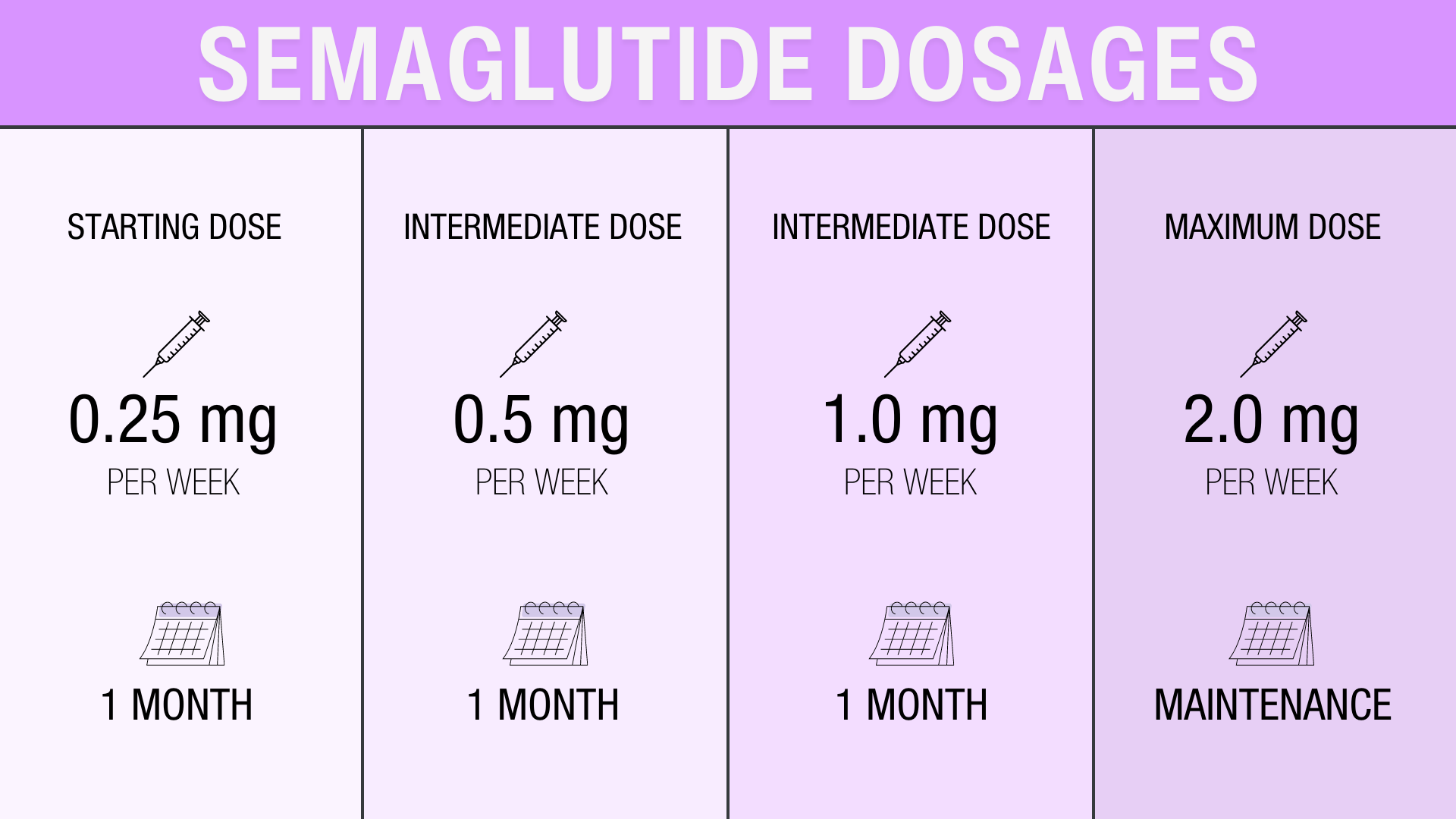
table of semaglutide dosage_purple

Not everyone follows the same Semaglutide dosage schedule. Some people choose to stay on a low dose of Semaglutide indefinitely to mitigate side effects. Others may prefer to reach the maximum dosage as fast as possible so they can enjoy optimal weight loss benefits. Though everyone is different, here is the Semaglutide dosage chart experts recommend for most people.

Starting Dose

Experts recommend a Semaglutide starting dosage of just 0.25 mg per week. You should remain at this dosage for a month or longer so your body can adjust to the medication. This isn’t an effective dose, but it’s necessary to start here if you want to minimize any side effects you may experience. At 0.25 mg per week, Semaglutide can’t regulate your blood sugar levels and likely won’t result in meaningful weight loss. However, as you continue to follow the Semaglutide weight loss dosage chart through its recommended increases, you will eventually see changes on the scale.

Intermediate Doses

After a month at the starting dose, your provider may increase your dosage to 0.5 mg of Semaglutide per week. However, if you’re experiencing unwanted symptoms on the lowest dose, they may keep you at that dose for a while longer. When you’re able to move up to a 0.5 mg dose, your provider will keep you at that dose for another month or longer.

If your body acclimates well to the 0.5 mg dose for at least a month, you may get the go-ahead to begin receiving 1.0 mg of Semaglutide per week. This dosage provides additional glycemic control. It’s also the maximum amount recommended for periodic maintenance treatments.

Intermediate Doses

After a month at the starting dose, your provider may increase your dosage to 0.5 mg of Semaglutide per week. However, if you’re experiencing unwanted symptoms on the lowest dose, they may keep you at that dose for a while longer. When you’re able to move up to a 0.5 mg dose, your provider will keep you at that dose for another month or longer.

If your body acclimates well to the 0.5 mg dose for at least a month, you may get the go-ahead to begin receiving 1.0 mg of Semaglutide per week. This dosage provides additional glycemic control. It’s also the maximum amount recommended for periodic maintenance treatments.

Maximum Dose

In some cases, people who reach the maximum recommended amount of 1.0 mg of Semaglutide per week don’t get the results they want. They may not achieve adequate glycemic control or lose weight as expected. If this happens to you, talk to your provider about adjusting your Semaglutide weight loss dosage chart. They may decide to boost your dose up to 2.0 mg of Semaglutide per week. This is the maximum allowable dose and should result in noticeable weight loss as well as improved blood sugar levels.

Dosage-Influencing Factors

No two individuals respond to medication the same way. That’s why there will never be a one-size-fits-all medication dosage chart that works 100% of the time. Here are some of the factors that can potentially influence your starting, maximum, and maintenance Semaglutide dosages:

  • Genetics: Things like body build and mass can impact how effective Semaglutide injections are for your body.

  • Sex: Your biological sex can influence how well you metabolize medication.

  • Disease: Some diseases reduce your body’s ability to absorb or excrete medications.

  • Age: Common physical problems associated with age can increase your likelihood of experiencing unwanted side effects from medications.

It’s important to start and continue your Semaglutide journey with help from a trusted professional. They’ll follow a Semaglutide weight loss dosage chart and monitor your progress. They’ll also give you recommendations for what you can do if you start to experience unwanted symptoms from your injections.

Who Should Not Receive Semaglutide?

Not everyone is a good candidate for Semaglutide injections. Your existing health can play a huge role in how you respond to the medication. In some cases, your health history could even disqualify you from this treatment. You should not receive Semaglutide injections if you have:

  • Thyroid cancer

  • Allergic reactions to Semaglutide or any of the components of the medication

  • Endocrine syndromes (such as Multiple Endocrine Neoplasia syndrome type 2)

Other health conditions increase your risk of complications while taking Semaglutide, but may not completely disqualify you from receiving this cutting-edge drug. If you have kidney impairment, diabetic retinopathy, or a history of pancreatitis, you must only take Semaglutide while being closely monitored by a professional. Women should not take Semaglutide while pregnant or breastfeeding.

Medical Supervision is the Key to a Successful GLP-1 Experience

someone talking to a provider

Some people purchase Semaglutide online and inject it themselves without medical guidance or reference to Semaglutide weight loss dosage chart recommendations. This is a dangerous decision that could lead to an increased risk of side effects or dangerous health conditions.

Checking in regularly with a professional can help you meet your weight loss goals in the safest way possible. Your provider will monitor your health to ensure your organs aren’t being damaged by the drug. They’ll also identify potential issues and interactions before they cause serious problems.

It may be tempting to crank up your Semaglutide dosage on your own so you can get rapid weight loss results even faster. However, this is an extremely risky decision. It’s far better to follow your provider’s expert dosage recommendations. You should never be so desperate to lose weight quickly that you sacrifice your overall health to reach your goal.

Why You Should Follow the Semaglutide for Weight Loss Dosage Chart

Following a structured dosage plan also makes it easier to monitor your reactions to the medication and to make adjustments to your dose as needed. Common side effects of Semaglutide include:

  • Gastrointestinal disturbances

  • Nausea

  • Vomiting

  • Diarrhea

  • Fatigue

  • Constipation

  • Headache

If you want to minimize these types of symptoms, it’s important to follow recommended Semaglutide dosage charts. Some people still experience unpleasant side effects even after following dosage recommendations. However, symptoms usually subside gradually after the first few weeks of taking the medication.

Calista Skin & Laser Center is dedicated to ensuring out GLP-1 patients know how to navigate Semaglutide side effects, so they can enjoy their weight loss journey without post-injection woes.

Get a Customized Weight Loss Plan at Calista Skin & Laser Center

Following a tried-and-proven Semaglutide dosage chart for weight loss is usually a great idea. However, your body is unique, and so are your weight loss goals. That’s why it’s so important to receive personalized care when you embark on your medication-assisted weight loss journey. Calista Skin & Laser Center is a respected provider of customized Semaglutide weight loss injections. Call us today at 817-488-3838 to schedule a consultation and receive your treatment plan.

Schedule a consultation

Please fill out the form below or call us at  817-488-3838

  • This field is for validation purposes and should be left unchanged.

By submitting this form, I consent to be contacted by Calista Skin & Laser Center Colleyville, TX via phone, text, email, or mail. Message and data rates may apply. Consent is not a condition of purchase. I acknowledge the Privacy Policy. Reply STOP to opt out

Disclaimer:

*We offer compounded versions of GLP-1 Weight Loss, which are not FDA-approved in any manner or clinically proven to provide any benefits. References to these medications on this website pertain to compounded formulations and are not associated with or equivalent to their non-compounded counterparts. Compounded medications are prepared by licensed pharmacies as prescribed by healthcare providers, and their safety and efficacy have not been evaluated by the FDA. Please consult your healthcare provider for personalized medical advice.

About the Author

I’m Kenneth Baird, Medical Director at Calista. I’ve been practicing family medicine since 1989 and became involved in aesthetics in 2005, starting with Botox injections and dermal fillers. I further expanded the scope of my practice to include anti-aging procedures and am currently a BioTE and GAINESWave provider. My patients appreciate my care and passion for their wellness, resulting in many satisfied patients and referrals. At the beginning of 2017, I became the Medical Director at Calista, where I perform and supervise clinical procedures. I’m excited to be performing aesthetic injections on Wednesday evenings.

When I’m not in the office, I enjoy spending time with my family, reading, exercising, and martial arts. As a third-degree black belt in Tae Kwon Do, I not only enjoy training but am also a corner judge and referee at state and national tournaments.

Schedule a consultation

Please fill out the form below or call us at 817-488-3838

  • This field is for validation purposes and should be left unchanged.

By submitting this form, I consent to be contacted by Calista Skin & Laser Center Colleyville, TX via phone, text, email, or mail. Message and data rates may apply. Consent is not a condition of purchase. I acknowledge the Privacy Policy. Reply STOP to opt out